Recently I had Heather from Women in the Scriptures over for lunch. How fun to actually meet her in person! She was telling me about how she got to take her kids swimming at a pool, but kid hours were only for 1 or 2 hours the whole day -- and those hours were right in the afternoon during nap time! How family unfriendly is that!?
Then, I remembered a story my husband told me about our friend who lived in Germany as a girl. At that time, in their location, some grocery stores did not allow children (maybe they still don't). Are you kidding me? How would you ever get the shopping done? She and her siblings had to wait outside while their mother went in and shopped!
Are we really trying to make it more inconvenient for families these days?
I realized these problems aren't just happening in other countries and in big cities, but in my own little city!
At our local rec. center, there's quite a walk from the parking lot to the main entrance (unless you get a good parking spot). However, there's an exit door that is close to the pools that people sometimes sneak in. One day, when I was pregnant and feeling particularly gross and light-headed, taking two kids to swimming lessons, and trying to get a one year-old to walk fast, I decided to go in those exit doors, because walking around to the main entrance would add probably 5 minutes to our travel time. (OK, maybe it wasn't 5, but it was at least 3 that felt like 5). An older worker lady saw us and told us to go around. I didn't give her any flack, but just turned right around and inched my way toward the real entrance because I knew I was in the wrong.
I came home and wrote a letter to the rec center suggesting that they could be more family friendly by opening up that exit door just for swim lesson time (you don't have to show any proof that you're there for lessons, you just say you're there and they open the gate at the main entrance, so there's nothing special about going the long way). I told them my experience of being a pregnant mother of young children and that that small thing would help me so much. I never did hear back, and they never did open the door. So much for making things nicer for young families during swimming lessons.
Anyway, what's my point? I guess I just think it's sad that we're becoming more family unfriendly. I wish I'd even remember how hard it is with little ones when I have my times where I don't have little ones. I can't tell you how many times I've been at the store and have seen the struggling mother and thought, "Aw, she can handle it, she's used to this chaos. She's tough, I'm sure." But really, she's probably about ready to cry, and I need to remember how hard it is! We all need to remember to lend a hand and ease the burdens of those struggling with containing their little children. I wish we had more places like Toys-R-Us and our pediatrician's office that has special parking for moms with babies.
Have you seen businesses/products be more family friendly/unfriendly? What can we do to be more helpful to families?
7/26/12 Update: Saw this on KSL.com today about the No Kids Allowed Movement.

Saturday, June 23, 2012

What I learned from building a fence

For instance, if your parents were yellers, but you know it's not very nice and something you don't want to do, then you don't do it. Right? Maybe not. I think people may not want to be yellers, but when it comes down to it, in certain situations, parents just don't know what to do, so they give in to yelling. Now luckily, yelling isn't one that I struggle with, nor did my parents, but it's easy for me to recognize and use as an example.
A difference I've noticed between my husband and me is our attitudes about work/manual labor. I remember looking at work/service projects as fun -- you get to spend time together, talk, and get something done. Of course it's not fun like going to an amusement park, but it feels good. My husband, on the other hand, always kind of grumbled and overall just doesn't like it.
This last week while my husband, father, and father-in-law were working on building us a new fence (ours had blown over in our December freak wind storm), I think I learned a reason why my husband and I have such different attitudes about physical work. While the guys were working away, I went outside to watch the progress. Everything was taking longer than expected, and I asked, "Are we having fun yet?" My dad responded with his normal, cheerful response and his obvious like of making things. My father-in-law said something that made me realize this was a burden to him. He commented that it's not fun now, but at least in the end we'd have something nice out of it.
"That's it!" I thought. This was why my husband and I think so differently about work! His dad didn't like it, so he doesn't; my dad did like it, so I do (mostly). I think that's a real generalization, but I do wonder how much of my husband's dislike of manual labor was passed to him from his father's attitude about it. Would my husband like work more had his dad been more positive about it? This really made me recognize that we probably do inadvertently pass on our attitudes to our children.
Now, I do recognize that maybe no matter how positive my husband's father could have been about work that my husband could still not like it, but I think that the chances of our children having a more positive attitude about it will be better when we are positive ourselves.
Another thing I realized during this fence project was that I really wanted to be out there helping, but between nursing a baby and caring for three other kids, it was pretty much impossible. At first, I felt stuck inside doing "girl stuff" like making lunch and providing ice water. Then I realized my job of providing food and water was just as important as the work they were doing; it was just different. Then I realized, too, some people may actually prefer to be inside taking care of the kids and making the food rather than working on the fence. So, it wasn't so much a "girl thing" versus a "boy thing", but a personal preference. At this time, it just makes more sense for me to be inside nursing and my husband outside hauling around 60 lb. bags of cement.
You can see in the picture that our cute little girl was out helping by handing my husband the screws. I hope she remembers that working together can be fun and that if she likes building fences, great, but sometimes she'll have to be taking care of her babies, she can build fences later.
Tuesday, June 5, 2012
Highs & Lows
A bit back I wanted to jot down one thing we do with our kids to communicate better with them. We got this idea from our friends Jeff and Janae who do it with their kids: Highs and Lows. How it works is when you're sitting around the dinner table, you ask everyone to share both a high and a low (a good thing and a bad thing) from the day.
You share a good thing because it's fun to hear good things, and you share a bad thing so everyone knows your human, and that you don't have a perfect life, and so that you can get support from your family. Even those who aren't the most natural sharers learn to share.
I know when we first mentioned the low part to my dad one time, he kind of balked at the idea and said we should focus on the positive. Sure, we should, but we felt it was more important to have open communication in all things.
I've seen this benefit us when my husband says something like this, "My low was that I ran into an Internet baddie" (that's what we call inappropriate pictures on line). Our kids know that it's easy to run into bad stuff like that and it's okay to tell -- if Dad tells, they can, too.
One day, our son reported that he ran into an Internet baddie. It wasn't all that bad, but we were really happy he wasn't ashamed to tell us.
You share a good thing because it's fun to hear good things, and you share a bad thing so everyone knows your human, and that you don't have a perfect life, and so that you can get support from your family. Even those who aren't the most natural sharers learn to share.
I know when we first mentioned the low part to my dad one time, he kind of balked at the idea and said we should focus on the positive. Sure, we should, but we felt it was more important to have open communication in all things.
I've seen this benefit us when my husband says something like this, "My low was that I ran into an Internet baddie" (that's what we call inappropriate pictures on line). Our kids know that it's easy to run into bad stuff like that and it's okay to tell -- if Dad tells, they can, too.
One day, our son reported that he ran into an Internet baddie. It wasn't all that bad, but we were really happy he wasn't ashamed to tell us.
Monday, June 4, 2012
Man Revolution
I don't even have time to comment on this, but I wanted to save it here. I should probably just "pin" it for later, but that would mess up my system. If women needed their own revolution to get them equality, it sounds like men need a revolution to give them some hope (and I know my punctuation is wrong!)
From "Growing Pains: Rate of young men struggling in careers alarmingly higher than young women" in the Deseret News:
1. "Nearly 40 percent of 18- to 29-year-olds are unemployed or out of the workforce, according to the Pew Research Center. More than a third rely on their parents to help make ends meet and, even among those who have jobs. . . ."
2. "Young men are less educated, more likely to be unemployed and more likely to live at home with their parents than their female peers. . . The achievement gap between young women and men has grown so wide that experts worry it may be contributing to the rising age of marriage and an increase in the number of single-parent homes."
3. During the recession, men lost twice as many jobs as women.
4. While the share of women living with their parents has remained a fairly steady 10 percent since 2007, the share of men living at home has increased from 14.2 percent to 18.6 percent.
5. ". . . the economy is shifting in a more female-friendly direction. . . . The manufacturing economy, which played to men's strengths, is on its way out. Today's economy is becoming increasingly knowledge-based and emphasizes softer skills such as communication and data analysis — things men can do, but that come easier to women. The emphasis on female-friendly skills is mirrored in schools . . . where as early as elementary school teachers now encourage learning strategies that girls excel at, like collaboration, and discourage those that come naturally to boys, like competition. As a result of what he calls "biased" teaching methods, by the time they graduate high school, men are already behind. At a university level, just 38 percent of men ages 18 to 24 were enrolled in college or graduate programs in 2010, compared to 44 percent of women, according to the Pew Research Center. Women are more likely to graduate, too. Thirty-six percent of women ages 25 to 29 had a bachelor's degrees, while just 28 percent of men obtained the milestone."
6. "Overall, women still earn only about 80 percent of men's wages, but among young adults, women out-earn men. . . . . . . the median full-time salaries of young women are 8 percent higher than those of their male peers. In some cities, young women bring in as much as 20 percent more. Experts attribute the disparity to the growing gap in educational achievement."
7. "When I started out, the boys would have big ambitions and the girls would have big ambitions," he said. "Slowly, year after year, young women finishing college have remained optimistic about the future, but young men have completely changed. If they are superstars and ... went to Harvard, they are doing OK. But if they are normal, went to a middling university or maybe even dropped out, these men are depressed and angry. They feel like the cards are stacked against them."
8. Accelerated by the recession, men's marriage rates dropped sharply over the past decade.
9. If society has made women into "sex objects," Farrell argues it has made men into "success objects."
10. As women power ahead, these expectations are wearing on men, Farrell said. Modern women have gained choices over the years. They can take a job. They can stay at home with their children. They can do both. Men, though, have only the option to work full time, work full time or work full time.
11. "Men are not valued if they aren't successful," Farrell said. "And in today's world, they are far less likely to be successful. Period. In comparison to women, they are in even worse shape."
12. Some put off marriage because they feel like they must first achieve financial stability, he says. Easy access to pornography is a factor, too, because it makes it easy for men to fulfill sexual needs. . . .
13. Because young adults are delaying marriage, a new decade of life has emerged. . . ."pre-adulthood." . . . "You find a new phenomenon of what I call the child man," . . . He is hanging around, playing video games with his friends much like he was in college." . . . As women have gained success, there's been increasing talk about "Why do I need a man?" says Hymowitz. In the future, she predicts more women, unable to find a man they see as their equal, will "go it alone" as single mothers.
14. "This isn't just an individual problem; this is a societal problem," Hymowitz says. "It isn't a purely economical problem; it is contributing to the breakdown of the family."
Ouch.
From "Growing Pains: Rate of young men struggling in careers alarmingly higher than young women" in the Deseret News:
1. "Nearly 40 percent of 18- to 29-year-olds are unemployed or out of the workforce, according to the Pew Research Center. More than a third rely on their parents to help make ends meet and, even among those who have jobs. . . ."
2. "Young men are less educated, more likely to be unemployed and more likely to live at home with their parents than their female peers. . . The achievement gap between young women and men has grown so wide that experts worry it may be contributing to the rising age of marriage and an increase in the number of single-parent homes."
3. During the recession, men lost twice as many jobs as women.
4. While the share of women living with their parents has remained a fairly steady 10 percent since 2007, the share of men living at home has increased from 14.2 percent to 18.6 percent.
5. ". . . the economy is shifting in a more female-friendly direction. . . . The manufacturing economy, which played to men's strengths, is on its way out. Today's economy is becoming increasingly knowledge-based and emphasizes softer skills such as communication and data analysis — things men can do, but that come easier to women. The emphasis on female-friendly skills is mirrored in schools . . . where as early as elementary school teachers now encourage learning strategies that girls excel at, like collaboration, and discourage those that come naturally to boys, like competition. As a result of what he calls "biased" teaching methods, by the time they graduate high school, men are already behind. At a university level, just 38 percent of men ages 18 to 24 were enrolled in college or graduate programs in 2010, compared to 44 percent of women, according to the Pew Research Center. Women are more likely to graduate, too. Thirty-six percent of women ages 25 to 29 had a bachelor's degrees, while just 28 percent of men obtained the milestone."
6. "Overall, women still earn only about 80 percent of men's wages, but among young adults, women out-earn men. . . . . . . the median full-time salaries of young women are 8 percent higher than those of their male peers. In some cities, young women bring in as much as 20 percent more. Experts attribute the disparity to the growing gap in educational achievement."
7. "When I started out, the boys would have big ambitions and the girls would have big ambitions," he said. "Slowly, year after year, young women finishing college have remained optimistic about the future, but young men have completely changed. If they are superstars and ... went to Harvard, they are doing OK. But if they are normal, went to a middling university or maybe even dropped out, these men are depressed and angry. They feel like the cards are stacked against them."
8. Accelerated by the recession, men's marriage rates dropped sharply over the past decade.
9. If society has made women into "sex objects," Farrell argues it has made men into "success objects."
10. As women power ahead, these expectations are wearing on men, Farrell said. Modern women have gained choices over the years. They can take a job. They can stay at home with their children. They can do both. Men, though, have only the option to work full time, work full time or work full time.
11. "Men are not valued if they aren't successful," Farrell said. "And in today's world, they are far less likely to be successful. Period. In comparison to women, they are in even worse shape."
12. Some put off marriage because they feel like they must first achieve financial stability, he says. Easy access to pornography is a factor, too, because it makes it easy for men to fulfill sexual needs. . . .
13. Because young adults are delaying marriage, a new decade of life has emerged. . . ."pre-adulthood." . . . "You find a new phenomenon of what I call the child man," . . . He is hanging around, playing video games with his friends much like he was in college." . . . As women have gained success, there's been increasing talk about "Why do I need a man?" says Hymowitz. In the future, she predicts more women, unable to find a man they see as their equal, will "go it alone" as single mothers.
14. "This isn't just an individual problem; this is a societal problem," Hymowitz says. "It isn't a purely economical problem; it is contributing to the breakdown of the family."
Ouch.
Thursday, May 31, 2012
Why Having Someone Else Clean My House Makes Me a Better Mom
A couple years ago, a friend told me that an older neighbor mentioned to her something about the cleanliness of the house reflecting upon the woman of the house. I think my friend and I were both a bit surprised. I haven't felt like it reflects on me (maybe I should, though), but on the family (and the amount of chaos it is in at the time). I do like my house clean because I like it clean. It stresses me out if it's not clean.
Anyway, during the last month before I had my baby (now almost 3 months old!), I had a 13-year old in the neighborhood come help clean my house because I knew I just wouldn't want to (or couldn't) do it. I told her I'd also want her to come clean the first 6 weeks after the baby was born, and then again before the baby blessing. Someone in her family would drop her off; she'd mop, vacuum, clean bathrooms, and whatever else I asked her to do. Then, her family would pick her up when we were done. There were some great advantages to this.
1. My house was cleaner. While she did her jobs (the basics usually), I did other jobs. We got more done than had been done in a long time! Even during the week, I'd work on jobs that didn't normally get done (like clean the grill on the fridge) instead of fretting about the regular jobs that constantly needed to be done.
2. I was less stressed about the house. I knew if I couldn't get to cleaning jobs during the week, she would when she came. I was able to let go a little bit and have more fun with the kids and not worry that we/they were making messes.
3. The house actually got really clean once a week for about an hour!
4. She got a good experience, earned some money, and I felt good about paying her.
5. She's a very good cleaner and even if it's not as good as I *might* do it, what she does is way better then when I *don't* do it.
The only disadvantage was that I feel like the family (kids particularly) need to be helping out around the house. I really like it when they de-clutter and I clean. It makes me feel like we're a team.
So, for the most part, I love having someone help me out. Even yesterday, I thought I might be able to stand to have more kids if I have more help! I say, house-cleaners for all if it helps us appreciate being moms more.* Try it, if you haven't, and tell me how it goes!
I might just have to try it for the rest of the summer!
*You know what else helps me be a happier mom? Massages. When I was pregnant, I got one every other week and it honestly made a world of difference. Insurances should cover pregnancy massages. Women would feel so much better! (I've actually struggled with lower back pain over the years, especially during pregnancy -- including sciatica -- and the massages have made this last pregnancy the most comfortable pregnancy yet. I've even gone to physical therapy for my SI joint in the past. But, through the massages, I think I've identified that when my IT band is tight, then it throws out my SI joint. Maybe?).
Update 6/5/12: My husband mentioned last night that when he read this post that he hoped we weren't becoming "those people" who are out of touch with reality because of me and my massages and our house cleaner helper. Then I realized we each choose our luxuries, don't we? Just to feel better I have to say, I've never had my hair colored, never had a manicure or a pedicure, and don't even have a smart phone, a Kindle-type device, or a Wii. I know there are PLENTY of people out there who don't have ANY of these luxuries I mention, and I think that's fine (we're way too entitled in our country). I feel pretty blessed for having massages and a house cleaner helper.
Anyway, during the last month before I had my baby (now almost 3 months old!), I had a 13-year old in the neighborhood come help clean my house because I knew I just wouldn't want to (or couldn't) do it. I told her I'd also want her to come clean the first 6 weeks after the baby was born, and then again before the baby blessing. Someone in her family would drop her off; she'd mop, vacuum, clean bathrooms, and whatever else I asked her to do. Then, her family would pick her up when we were done. There were some great advantages to this.
1. My house was cleaner. While she did her jobs (the basics usually), I did other jobs. We got more done than had been done in a long time! Even during the week, I'd work on jobs that didn't normally get done (like clean the grill on the fridge) instead of fretting about the regular jobs that constantly needed to be done.
2. I was less stressed about the house. I knew if I couldn't get to cleaning jobs during the week, she would when she came. I was able to let go a little bit and have more fun with the kids and not worry that we/they were making messes.
3. The house actually got really clean once a week for about an hour!
4. She got a good experience, earned some money, and I felt good about paying her.
5. She's a very good cleaner and even if it's not as good as I *might* do it, what she does is way better then when I *don't* do it.
The only disadvantage was that I feel like the family (kids particularly) need to be helping out around the house. I really like it when they de-clutter and I clean. It makes me feel like we're a team.
So, for the most part, I love having someone help me out. Even yesterday, I thought I might be able to stand to have more kids if I have more help! I say, house-cleaners for all if it helps us appreciate being moms more.* Try it, if you haven't, and tell me how it goes!
I might just have to try it for the rest of the summer!
*You know what else helps me be a happier mom? Massages. When I was pregnant, I got one every other week and it honestly made a world of difference. Insurances should cover pregnancy massages. Women would feel so much better! (I've actually struggled with lower back pain over the years, especially during pregnancy -- including sciatica -- and the massages have made this last pregnancy the most comfortable pregnancy yet. I've even gone to physical therapy for my SI joint in the past. But, through the massages, I think I've identified that when my IT band is tight, then it throws out my SI joint. Maybe?).
Update 6/5/12: My husband mentioned last night that when he read this post that he hoped we weren't becoming "those people" who are out of touch with reality because of me and my massages and our house cleaner helper. Then I realized we each choose our luxuries, don't we? Just to feel better I have to say, I've never had my hair colored, never had a manicure or a pedicure, and don't even have a smart phone, a Kindle-type device, or a Wii. I know there are PLENTY of people out there who don't have ANY of these luxuries I mention, and I think that's fine (we're way too entitled in our country). I feel pretty blessed for having massages and a house cleaner helper.
Wednesday, May 30, 2012
The Gift of Giving Life: Meet Sheridan
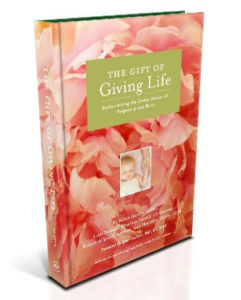
The book includes many birth stories. I've quite enjoyed reading them; I've never found so many all in one place (other than the Internet, but that's not bound in book form). It's odd that half of humankind has the capacity to give birth, yet we often fail to share our birth stories. Perhaps it's because it is so common; perhaps it's because it's so intimate. Perhaps the Adversary makes us feel embarrassed about sharing, and then we forget the beauty of the process of life. Then, he substitutes worldly beauty for the divine gift of life and women don't want to birth anymore. Books like this can help us remember the beauty of pregnancy and birth. We can remember what makes us different from men.
Anyway, in meeting and visiting with Robyn Allgood, I learned that I could "interview" Sheridan Ripley, one of the authors, for my stop on the Virtual Book Tour. Sheridan is a mom of three and a doula. She graduated from Vanderbilt University and served a mission to France. She blogs at www.enjoybirth.com.
Sheridan's contributions to the book include quite a bit on C-sections and VBACs, as she's experienced both. She brings to light that even though a C-section isn't the most natural way to deliver a baby, it can still be a spiritual experience. Although I've never had a C-section, I appreciated the insight; it made C-sections seem not quite so scary anymore.
***
Meet Sheridan

1. Why did you want to produce a book like this?
What need did you see was out there for a resource like this?
I will admit that while I had
spiritual experiences related to my births, I didn’t really realize that this
was a power that I could choose to harness.
For example, I had priesthood blessings in my first pregnancy because
there were problems, but I don’t think I ever did with my other pregnancies or
births (they were “normal”). Also in
reading some of the essays in our book, I realize I did have spiritual
experiences, but didn’t recognize them as such.
It wasn’t even on my radar that pregnancy and birth should be
spiritual. I wish this book existed when
I was pregnant. I devoured probably over
100 pregnancy and birth books over the years and this information was not out there!
After I became a Hypnobabies
Childbirth Educator and hypno-doula and worked with more and more pregnant moms
my eyes were opened! I saw some women
who really harnessed the power of the divine nature of pregnancy and birth and
how their journeys were so special. (Regardless
of the birth they had.) I started
blogging and talking about it with moms, but realized that this was an aspect
that needed to be shared on a bigger platform so more women could have the
knowledge and tools to harness this power that God wants to share with us.
The Gift of Giving Life does that.
It gives moms information through the
essays and the stories demonstrate how women have used spirituality to navigate
through this journey to motherhood.
2.
How did you get involved with the group of
ladies writing The Gift of Giving Life?
I read Felice’s blog, The Gift of Giving Life and was excited to see her desire to write a book about spirituality and birth. That was a topic that I felt excited about. I had actually had similar desires to write such a book. I was in the process of writing a different book at the time. The Top Three Tips to Enjoy Your Birth that I offer as a give away on my blog and it took SO much work that I said, “I will never write a book again!” I think I may have contacted Felice in July 09, but energetically I was pretty closed off to being a part of another book at the time because I was overwhelmed with mine.
Felice picked other contributors but once I was finished my book, I was sad that I wasn’t part of her project. Then in June of 2010, I was introduced to Felice via her friend Chelsea. I shared my Power, Love and Sound Mind essay and she liked it. So after rewriting it and making it “less bloggy” I had a section in the book. We also met in person and I guess she liked me because by September she added me to the Google Group with the other contributors.
It has been a lot of work, but so much easier than writing a book on my own. We all have different strengths and we really take advantage of that. We make a great team. I feel so blessed to be a part of it. It is funny that I have really only met Felice and Meleah in person, but feel like I know all the girls so well. I am so excited to meet them all at the LDS Holistic Conference in June.
3. Has being a part of this project changed you in any way? (I might just say, HOW has this project changed you?)
It has strengthened my testimony of
how the Lord will guide us as we do His work. I have felt the Lord guide me in my personal
life many times, but to see him guide us as a group was SO impressive.
It has been truly amazing and humbling to see
how the Lord has helped us every step of the way. Individually as co-authors we would receive inspiration
about directions in which the book should go.
For instance at first it was more of a Natural Childbirth Book. I think that one reason the Lord guided me
into the group was because I have had 3
very different births. Interestingly,
Robyn (another VBAC mom) joined the same time I did and I think we had the
insight to help guide the group in a different direction, more inclusive of all
birth types. In the end our book covers
ALL birth types and supports the idea that each individual mom can be guided to
what the best birth for her and her baby is.
Another way it has changed me is
that now I want to experience a pregnancy/birth journey in a spiritual way. I have always wanted another baby, but
thought my husband was really “done”. The
section on Personal Revelation in the book had a huge impact on my being more
open with him about my feelings and our fears.
Recently I have begun blogging about how we are preparing to have
another baby, if it is meant to be. If we do have another baby, it will definitely
be because of the involvement I had in this book. What bigger or better change could there be
then a new baby?

Friday, May 18, 2012
I enjoyed Becca's post on Gender & Equality over at My Soul Delighteth. Take a look if your into that kind of thing. She may not have answers, but she gave me some good stuff to think about.
Subscribe to:
Posts (Atom)